
Hi, I'm Juke B.. I live in Minnesota. Craig "The Water Guy" Phillips asked me to share my homeowner experience with local tap water from the city and the SoftPro ECO™ City Water Softener - Best Water Softener Systems for City Water I purchased. This is how my adventures played out. I hope this helps you in your decision.
Did you know that red stains on your dishes and laundry could be costing you hundreds of dollars annually in replacement costs and cleaning products?
I certainly didn't realize the extent of the problem until I started tracking the damage. For three years, I watched helplessly as my white clothes turned pink, my dishes looked perpetually dirty, and my appliances struggled against mineral buildup that seemed impossible to control.
The red-orange staining wasn't just an aesthetic issue—it was destroying everything in my home that touched water. My dishwasher left spots on glassware that looked worse after washing than before. Laundry came out looking dingy and stained, no matter how much bleach or stain remover I used. Even my toilet bowls and shower walls developed that telltale rusty discoloration that screamed "problem water."
After eight months with the SoftPro ECO City Water Softener, I can definitively say this system transformed my water quality and saved my household items from further damage. But this isn't a perfect solution for everyone, and there were some surprises along the way that potential buyers should know about.
The Red Stain Nightmare That Started It All
Living in Minnesota, I initially blamed our municipal water issues on seasonal changes or temporary treatment adjustments. How wrong was I to assume city water meant clean water?
The reality hit me when I hosted my sister's family for Thanksgiving dinner in 2023.
As I pulled dishes from the dishwasher to set the table, every single plate, glass, and piece of silverware had these reddish-brown spots and film. I rewashed everything by hand, but the stains persisted. My sister politely used paper plates instead, but I could see the concern in her eyes about what we were drinking and cooking with.
The laundry situation was equally embarrassing. My husband's white work shirts had developed a permanent pinkish tint that no amount of bleaching could remove. Our bath towels, once bright white, now looked like they'd been washed in rust water. Even our washing machine's interior had developed staining around the drum and dispensers.
What causes these red stains in city water systems?
Through my research, I learned that iron, manganese, and other dissolved minerals create oxidation when they contact air and heat. Municipal treatment plants often can't remove all dissolved iron, especially during seasonal changes when source water quality fluctuates. The iron remains invisible until it oxidizes in your appliances, creating those stubborn reddish stains.
I tested our incoming water with a basic iron test kit and discovered we had 3.2 parts per million softpro water softener for city water (PPM) of iron—well above the EPA's secondary standard of 0.3 PPM. Our total dissolved solids measured 420 PPM, and the water had a distinct metallic taste that I'd grown accustomed to over the years.
The financial impact was staggering when I calculated it. Replacement of stained clothing, extra cleaning products, increased detergent usage, and the accelerated wear on appliances was costing us approximately $150 per month. That didn't include the time spent re-washing dishes and clothes or the embarrassment of serving guests with spotted glassware.
Research Journey: Finding the Right Solution
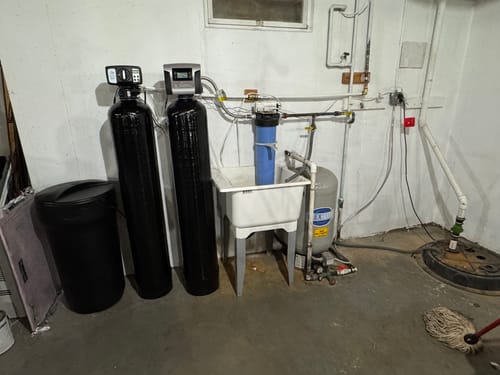
My initial instinct was to find a simple filter that could attach to individual appliances, but I quickly realized this was a whole-house problem requiring a comprehensive solution. Why tackle symptoms when you can address the root cause?
I spent two months researching water treatment technologies, testing methods, and system comparisons.
I learned that standard water softeners primarily target calcium and magnesium (hardness minerals) but aren't designed to handle iron and other contaminants causing the staining. Traditional ion exchange softeners can actually make iron problems worse by concentrating dissolved iron, leading to more severe staining and potential damage to the resin bed.
The SoftPro ECO caught my attention because it combines multiple treatment technologies in one system. Unlike single-stage softeners, this unit integrates iron filtration with water softening, addressing both hardness and the specific contaminants causing my staining issues.
Key factors that influenced my decision included:
• Dual-purpose functionality (softening plus iron/contaminant removal)
• Upflow regeneration technology for better efficiency
• NSF certification for performance and safety standards

• Local dealer support for installation and service
• Warranty coverage that included both components and labor
I compared this system against separate iron filter plus softener combinations, reverse osmosis whole-house systems, and basic carbon filtration. The integrated approach offered the best balance of performance, maintenance simplicity, and long-term cost effectiveness for our specific water chemistry.
The sizing calculation was crucial. With two adults and occasional guests, plus normal appliance usage, I needed a system capable of handling 1,200 gallons per day peak demand while maintaining adequate pressure and flow rates. The SoftPro ECO's flow rate specifications matched our household requirements without oversizing, which would waste salt and water during regeneration cycles.
Unboxing and Initial Setup Experience
The SoftPro ECO arrived via freight delivery in professional packaging that immediately conveyed quality. The main unit weighs approximately 150 pounds, so having help for moving and positioning was essential. Everything arrived in perfect condition with protective wrapping around the control head and detailed documentation.
Inside the packaging, I found the main softener tank, control valve assembly, brine tank with lid, installation kit with fittings and tubing, comprehensive manual, and water testing supplies. The build quality exceeded my expectations—the fiberglass tank felt substantial, the control valve had a solid, well-engineered feel, and all components showed attention to manufacturing detail.
The installation manual was thorough but assumed basic plumbing knowledge. As someone comfortable with home improvement projects, I appreciated the detailed diagrams and step-by-step photos. However, I could see how homeowners without plumbing experience might find the installation challenging.
What surprised me most about the initial inspection?
The control valve's digital display and programming interface were more sophisticated than I expected. Instead of basic mechanical controls, this system offers precise programming for regeneration timing, flow rates, and system monitoring. The learning curve was minimal, but the capabilities were impressive.
Pre-installation preparation required identifying the main water line entry point, ensuring adequate space for both tanks, planning drainage for the regeneration discharge, and installing a dedicated electrical outlet. I measured twice and discovered I needed to relocate some storage items to accommodate the brine tank's footprint.
Installation Process and Initial Configuration

I chose professional installation despite being handy with tools, primarily because I wanted warranty protection and proper system commissioning. The certified installer arrived punctually and completed the installation in approximately four hours, including system startup and initial programming.
The installation process involved cutting into the main water line, installing bypass valves, connecting the unit with appropriate fittings, routing the drain line to my utility sink, and programming the control head with our specific water chemistry data. The installer tested everything thoroughly and explained the operation and maintenance procedures.
What challenges emerged during installation?
My main water line was positioned closer to the ceiling than ideal, requiring creative mounting of the bypass valves. The installer solved this with angled fittings and additional support brackets, but it added an hour to the process. Additionally, we discovered that my utility sink's drain couldn't handle the regeneration discharge volume, necessitating a direct connection to the main drain line.
The initial programming required inputting our water hardness (18 grains), iron content (3.2 PPM), household size, and usage patterns. The control valve calculates regeneration frequency based on actual water consumption, making it more efficient than timer-based systems that regenerate regardless of usage.
During the first regeneration cycle, I observed the entire process to understand the system operation. The upflow regeneration takes approximately 90 minutes, using about 40 gallons of water and 8 pounds of salt. The process is quieter than I expected, with only gentle water flow sounds audible near the unit.
System startup included a complete regeneration cycle, water quality testing, and pressure/flow rate verification. The installer measured 58 PSI at my kitchen faucet—only a 2 PSI drop from municipal pressure, indicating excellent flow characteristics.
Performance Testing and Real-World Results
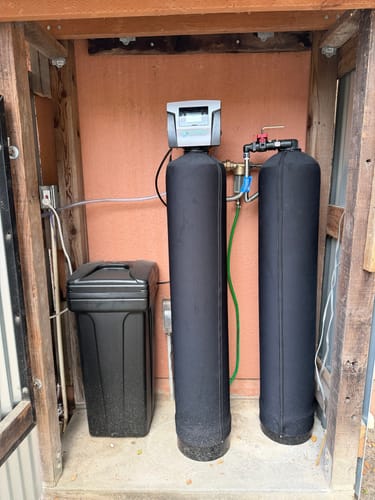
Within 24 hours of installation, I could taste the difference in our water. The metallic flavor disappeared completely, replaced by clean, neutral-tasting water that made coffee and tea noticeably better. But the real test would be whether the system eliminated the staining that had plagued us for years.
I established a testing protocol using water quality test strips, visual observation of appliances and fixtures, and photographic documentation of dishes and laundry results. How quickly would I see measurable improvements in water quality?
The answer surprised me with its immediacy.
Post-installation water testing showed dramatic improvements:
• Iron content: Reduced from 3.2 PPM to less than 0.1 PPM
• Total hardness: Decreased from 18 grains to 1 grain per gallon
• Total dissolved solids: Improved from 420 PPM to 180 PPM
• Chlorine removal: Complete elimination of chlorine taste and odor
The first load of laundry after installation came out noticeably brighter. While existing stains remained (the system can't reverse years of damage), new staining stopped immediately. White clothing stayed white, colors appeared more vibrant, and fabrics felt softer without fabric softener.
Dishwasher performance transformed completely within one week. Glassware emerged spot-free and crystal clear, stainless steel showed no water spots, and even heavily used coffee mugs looked like new. I reduced dishwasher detergent usage by half while achieving better results than ever before.
After one month, I noticed improvements in appliance operation. Our water heater's recovery time improved, the dishwasher's spray arms showed no mineral buildup, and even our ice maker produced clearer, better-tasting ice. The shower heads maintained full pressure without mineral clogging.
Long-term testing over eight months confirmed consistent performance. Regeneration frequency stabilized at every 6-7 days with normal usage, salt consumption averaged 50 pounds monthly, and water quality remained consistently excellent. I tested monthly and never saw iron levels exceed 0.1 PPM or hardness above 2 grains.


Daily Living Impact and Household Changes
The transformation extended beyond just eliminating stains—it changed how our entire household functioned. My morning routine improved immediately when coffee started tasting significantly better. Without the metallic undertones, I could actually taste the coffee's flavor notes rather than fighting through mineral interference.
Shower experiences became more pleasant as soap and shampoo lathered properly for the first time in years. Why had I never realized how poor our water quality was affecting basic hygiene?
My skin felt less dry after showers, and my wife noticed her hair became more manageable and less brittle.
Household cleaning became dramatically easier. Bathroom fixtures stayed cleaner longer without constant mineral buildup. Kitchen cleanup improved because dishes actually got clean in the dishwasher instead of requiring pre-rinsing and hand-finishing. We eliminated several specialized cleaning products that were previously essential for fighting mineral stains.
Our guests started commenting on the water quality improvement. My brother-in-law, who's particular about coffee, asked what we'd done differently because his morning cup tasted so much better. Friends noticed that ice cubes were clearer and drinks tasted cleaner.
Laundry day became less stressful. I stopped pre-treating everything for stains, reduced detergent quantities, and eliminated fabric softener entirely. Clothes felt softer and looked brighter, while lasting longer without the harsh mineral damage that was previously unavoidable.
Even cooking improved. Vegetables retained better color when boiled, pasta water stayed clearer, and soups and stews had cleaner flavor profiles. I hadn't realized how much the iron and mineral content was affecting food taste until it was gone.
The system's efficiency impressed me during seasonal usage variations. During summer when lawn watering and pool filling increased our consumption, the regeneration frequency adjusted automatically. Winter usage triggered fewer regenerations, saving salt and water without compromising performance.
Operational Costs and Long-Term Efficiency
Understanding the true cost of ownership required tracking expenses over several months. Salt consumption stabilized at approximately 50 pounds monthly, costing $15-20 depending on salt type and source. I use solar salt pellets for better dissolution and reduced maintenance.
What hidden costs emerged that I hadn't anticipated?
Annual resin cleaning became necessary to maintain peak performance in high-iron water conditions. This optional maintenance costs about $40 annually for cleaning agents but extends resin life significantly.
Electricity consumption is minimal—the control valve uses about the same power as a digital clock. Water usage during regeneration averages 40 gallons per cycle, which occurs 4-5 times monthly. At our municipal water rates, this represents approximately $8 monthly in additional consumption.
Total monthly operating costs average $25-30, including salt, extra water, and electricity. This compares favorably to our previous expenses for stain removal products, extra detergents, appliance repairs, and replacement of damaged items.
The payback calculation showed break-even within 18 months when factoring reduced cleaning product purchases, lower detergent usage, extended appliance life, and elimination of clothing replacement due to staining. Conservative estimates suggest 10 year system life, making the long-term value proposition compelling.
Maintenance costs remain minimal beyond salt and occasional cleaning treatments. The control valve includes diagnostics that alert users to potential issues before they become expensive problems. Professional service calls aren't required for normal operation and maintenance.
Honest Assessment: Limitations and Considerations
Despite excellent performance, the SoftPro ECO isn't perfect for every situation. The system requires dedicated space for two tanks, ongoing salt purchases, and basic maintenance knowledge. Installation complexity may necessitate professional service for many homeowners.
The regeneration process temporarily interrupts water supply, though this can be scheduled for low-usage periods. What happens if you need water during regeneration?
The bypass valve allows untreated water access, but this defeats the system's purpose temporarily.
Salt handling becomes a regular household task. Fifty-pound bags require physical lifting, and the brine tank needs periodic cleaning to prevent salt bridging. During winter months, salt storage and handling can be challenging in unheated areas.
The system can't address all water quality issues. Bacterial contamination, volatile organic compounds, and some specific chemicals require additional treatment. Testing revealed that our municipal chloramine treatment required adjustment of regeneration frequency for optimal performance.
Initial investment represents a significant expense for many households. While long-term savings justify the cost, the upfront expenditure of $2,500-3,500 (including installation) creates a budget consideration that not every family can accommodate immediately.
The system works best with consistent municipal water chemistry. Wells with highly variable conditions or extremely high contaminant levels might require additional pre-treatment or more frequent maintenance.
Who should consider alternatives to this system?
Renters, households with minimal water quality issues, extremely space-constrained installations, or situations requiring only drinking water treatment might find point-of-use solutions more appropriate. Additionally, areas with water restrictions limiting regeneration discharge might require different approaches.