
Hi, I'm Farhan P. I live in Oklahoma. Craig "The Water Guy" Phillips asked me to share my homeowner experience with local tap water from the city and the SoftPro ECO™ City Water Softener - Best Water Softener Systems for City Water I purchased. This is how my adventures played out. I hope this helps you in your decision.
When I first started researching water softeners eight months ago, I had no idea I'd end up cutting and sweating copper pipes in my basement. But if you're installing this system in a house that has never had a water softener, you will have to cut and sweat new copper pipes and fittings to bring your water supply to the new system.
That reality hit me pretty quickly during my research phase.
Now, after eight months of daily use, I can honestly say this installation challenge was worth every drop of sweat. The SoftPro ECO has completely transformed our water quality, and I've learned more about plumbing than I ever expected. Let me walk you through my entire journey—from the frustrating hard water problems that drove me to research solutions, through the installation process that tested my DIY skills, to the remarkable results we're experiencing today.
The Hard Water Nightmare That Started It All
Living in Oklahoma, I thought slightly hard water was just part of life. Our city water tested at around 12 grains per gallon—not extreme, but enough to create a cascade of annoying problems that slowly drove me crazy over the years.
The first thing I noticed was the white, chalky buildup on every surface water touched. My coffee maker developed a crusty coating inside that no amount of vinegar cleaning could completely eliminate. The showerheads accumulated mineral deposits that reduced water flow to pathetic dribbles. Most frustrating was watching our relatively new stainless steel appliances develop water spots and film that made them look permanently dirty, no matter how much I scrubbed.
But the real wake-up call came when our water heater started making concerning noises.
The service technician who inspected it showed me the mineral buildup inside and explained how hard water minerals—primarily calcium and magnesium—create scale deposits that reduce efficiency and shorten appliance life. He estimated we'd lost about 15% efficiency already, and replacement was inevitable within a few years if we didn't address the water quality.
Beyond appliances, the personal effects were becoming unbearable. My wife complained constantly about her hair feeling dry and tangled after showers. Our skin felt tight and itchy, especially during winter months. We were going through ridiculous amounts of soap and shampoo, yet nothing seemed to lather properly or rinse clean.
The financial impact was adding up too. We were spending extra on bottled water for drinking, specialty cleaning products to combat mineral stains, and frequent descaling treatments for appliances. When I calculated the annual costs plus the premature appliance replacement timeline, investing in a whole-house solution became an obvious necessity rather than a luxury.
Research Phase: Learning About Water Softening Technology
I spent weeks researching water treatment options, quickly discovering that not all systems are created equal. The fundamental principle behind water softening involves ion exchange—hard water minerals like calcium and magnesium are replaced with sodium ions through a resin bed process. This technology has been refined over decades, but the quality of components and engineering varies dramatically between manufacturers.
What drew me to investigate SoftPro specifically was their focus on efficiency and smart regeneration cycles.
Traditional softeners regenerate on preset timers regardless of actual water usage, wasting salt and water. The SoftPro ECO uses demand-initiated regeneration, monitoring actual water consumption and hardness removal to regenerate only when necessary.
I researched NSF certification standards extensively, learning that NSF/ANSI Standard 44 governs water softener performance and safety. The SoftPro ECO carries this certification, ensuring it meets strict standards for contaminant reduction, structural integrity, and materials safety. This wasn't just marketing—it represented third-party validation of performance claims.
Capacity calculations became crucial in my selection process. Our household of four uses approximately 300 gallons daily, and with 12 grains per gallon hardness, we needed a system capable of removing about 3,600 grains of hardness daily. The SoftPro ECO's 48,000-grain capacity provided comfortable headroom while maintaining efficiency.
I also investigated the control valve technology, learning that SoftPro manufactures their own Vortech™ distributors and control valves rather than using generic components. This integrated approach appealed to me because it suggested better quality control and component compatibility.
Salt efficiency became another decision factor. The SoftPro ECO's upflow regeneration process uses significantly less salt than traditional downflow systems—approximately 6 pounds per regeneration versus 15-20 pounds for conventional units. Living in an area where salt delivery isn't always convenient, this efficiency advantage had practical appeal.
Installation Reality: The Plumbing Challenge
The installation process proved more involved than I initially anticipated. Since our house had never had a water softener, I needed to install a complete bypass loop with shut-off valves, unions, and proper drainage connections.
This meant cutting into the main water line and creating a parallel path that could route water through the softener or bypass it entirely during maintenance.
I decided to tackle the installation myself, partly for cost savings but mostly because I wanted to understand the system completely. The process required several trips to the hardware store as I accumulated the necessary copper fittings, flux, solder, and tools. Planning the layout took considerable time—I needed to ensure adequate clearance for salt loading, electrical access for the control valve, and proper drainage for the regeneration discharge.
Cutting the main water line was nerve-wracking, even after shutting off the main valve and draining the system. I installed the bypass loop with three-quarter-inch copper pipe, using compression fittings for the unions to allow easy disconnection if needed. The most challenging aspect was ensuring all joints were properly sealed while maintaining correct pipe alignment.
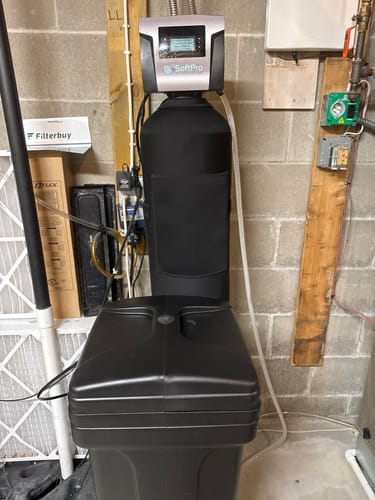
Positioning the actual softener unit required careful consideration of the installation space. The SoftPro ECO measures about 54 inches tall and 13 inches in diameter, requiring several feet of clearance above for salt loading. I installed it on a concrete pad in our basement utility room, close enough to the electrical panel for the 110V connection but with easy access to the drain for regeneration discharge.
The control valve installation proved straightforward once the plumbing connections were complete. SoftPro provides clear wiring diagrams, and the electrical connection involved only basic 110V wiring to a nearby outlet. Programming the initial settings required inputting our water hardness level, household size, and regeneration preferences through the digital control panel.
Total installation time stretched across two weekends—partly due to my cautious approach and multiple hardware store runs, but also because I wanted to test each connection thoroughly before proceeding. The system includes detailed installation manuals, and SoftPro's technical support was helpful when I had questions about optimal regeneration timing.
First Month: Breaking In and Initial Results

The immediate difference in water quality was remarkable, though the full benefits took several weeks to become apparent. Within 48 hours of startup, I noticed our soap lathered more easily and shower water felt noticeably different—softer and less drying to skin. The change was subtle but unmistakable.
During the first week, I monitored the system operation closely, checking for leaks and observing the regeneration cycles. The SoftPro ECO regenerates during predetermined hours (I set it for 2 AM) to avoid disrupting daily water usage. The process takes approximately 90 minutes and uses about 50 gallons of water for backwashing and rinsing the resin bed.
The first regeneration cycle was both exciting and concerning—would the system work as promised?
I tested the water hardness before and after using a digital TDS meter and hardness test strips. Pre-treatment readings showed 12 grains per gallon, while post-treatment consistently measured less than 1 grain per gallon—excellent results that met manufacturer specifications.
I began noticing secondary benefits within two weeks. Our coffee maker, which had been producing increasingly bitter coffee due to mineral buildup, suddenly delivered much better-tasting results. Glassware emerged from the dishwasher without spots or film. Most surprisingly, our laundry felt softer and brighter without changing detergents or fabric softeners.
The salt consumption during the first month tracked closely to SoftPro's efficiency claims. I loaded approximately 200 pounds of solar salt initially, and after four regeneration cycles, consumption appeared consistent with the projected 6-8 pounds per cycle. This efficiency exceeded my expectations compared to traditional softeners that might use twice as much salt.
One minor adjustment was needed during the break-in period. The initial regeneration frequency seemed too conservative for our usage pattern, so I adjusted the capacity setting to trigger regeneration slightly earlier. This customization capability demonstrated the system's flexibility in adapting to specific household needs.
Performance Analysis: Eight Months of Real-World Testing
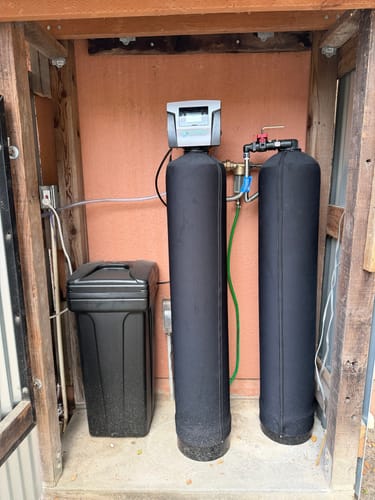
After eight months of continuous operation, I can provide a comprehensive assessment of the SoftPro ECO's performance across multiple criteria. The consistency has been impressive—water quality remains excellent, and the system continues operating efficiently without any maintenance issues beyond routine salt refilling.
Water quality testing reveals sustained performance. Monthly hardness tests consistently show less than 1 grain per gallon of residual hardness, indicating the ion exchange resin continues functioning at full capacity. Total dissolved solids measurements have decreased from 320 ppm to approximately 280 ppm, reflecting the replacement of calcium and magnesium ions with sodium ions.
The demand-initiated regeneration system has proven highly accurate. Based on our actual usage patterns, the system typically regenerates every 6-8 days, consuming about 3,000 gallons during that period. This aligns perfectly with the calculated capacity based on our water hardness and consumption volume, demonstrating sophisticated monitoring and control algorithms.
Salt efficiency remains excellent. We average about 6.5 pounds of salt per regeneration cycle, translating to approximately 25-30 pounds monthly for our household. At current salt prices, this represents about $8-10 monthly operating cost for consumables—significantly lower than the premium we were paying for bottled water and specialty cleaning products.
The upflow regeneration design has maintained consistent performance without the channeling issues that can affect traditional downflow systems. The resin bed appears to clean and recharge uniformly, maintaining full capacity rather than gradually declining over time.
What about reliability and maintenance requirements?
The system has operated flawlessly with minimal intervention. Beyond monthly salt additions, the only maintenance has been occasional cleaning of the salt bridge that can form in the brine tank. The control valve's self-diagnostic features provide clear status information and alert for any operational issues.
Energy consumption is negligible—the control valve and regeneration motor draw minimal electricity, adding perhaps $2-3 monthly to our utility bill. Water usage for regeneration averages about 50 gallons per cycle, which is reasonable considering the volume of water being treated.
Household Impact: The Daily Living Transformation
The transformation in daily living has exceeded my initial expectations. What began as a solution to hard water annoyances has evolved into a comprehensive improvement in household water quality that affects virtually every water-related activity.
Personal care improvements are the most immediately noticeable benefits. Showering with soft water feels completely different—soap and shampoo lather easily, rinse clean, and leave skin and hair feeling smooth rather than dry and tangled. My wife reports that her hair color lasts longer and requires fewer conditioning treatments. Our children's sensitive skin conditions have improved noticeably since the installation.
Kitchen activities have been transformed. Cooking with soft water produces better results—pasta water boils more efficiently, coffee and tea taste cleaner, and ice cubes freeze crystal clear without the cloudy appearance caused by mineral content. Dishwashing requires less detergent and produces spot-free results on glassware and stainless steel.
Cleaning throughout the house has become easier and more effective. Bathroom surfaces stay cleaner longer without the constant battle against mineral deposits. Shower doors maintain their clarity, and faucets retain their shine without weekly scrubbing. Laundry emerges softer and brighter, and white clothes have regained their original appearance after months of mineral-induced dullness.
The appliance protection benefits are becoming increasingly apparent over time.
Our water heater operates more quietly and efficiently without the mineral buildup that was beginning to affect performance. The dishwasher's spray arms maintain full flow without mineral clog issues. Small appliances like coffee makers and humidifiers operate without the constant maintenance previously required to combat scale buildup.
Unexpected benefits continue emerging. Our softpro water softener system for city water swimming pool requires fewer chemicals to maintain proper pH balance since our source water is no longer contributing excess minerals. Garden irrigation seems more effective, though this might be psychological rather than measurable.
The financial impact has been overwhelmingly positive. We've eliminated bottled water purchases, reduced cleaning product consumption, and avoided the appliance maintenance costs that were becoming routine. The projected water heater replacement has been deferred indefinitely, representing thousands in avoided costs.
Cost Analysis: Investment and Ongoing Economics
The total investment for our SoftPro ECO installation breaks down into several components that potential buyers should understand. The unit itself cost approximately $1,200, which positions it in the premium segment but below some high-end alternatives. Installation costs varied depending on the complexity of plumbing modifications required.
My DIY installation saved considerable money but required substantial time and moderate plumbing skills. Professional installation quotes ranged from $500-800 depending on the complexity of creating the bypass loop and electrical connections. For houses without existing softener plumbing, budget an additional $200-400 for fittings, valves, and miscellaneous hardware.
Operating costs have proven lower than anticipated. Monthly salt consumption averages 25-30 pounds, costing about $8-10 depending on salt type and local pricing. Solar salt provides excellent performance at lower cost than specialty softener salts. Electricity consumption is minimal—perhaps $2-3 monthly for the control valve and regeneration motor.
Water usage for regeneration adds about 200 gallons monthly to our bill, representing roughly $3-5 in additional water costs. This seems reasonable considering the 8,000-10,000 gallons of soft water produced monthly. The efficiency ratio of treated water to regeneration water consumption is approximately 40:1, which exceeds industry averages.

What about the return on investment timeline?
Calculating payback involves multiple factors beyond the initial purchase price. We've eliminated approximately $30 monthly in bottled water purchases, reduced cleaning product costs by about $15 monthly, and avoided an estimated $200 annually in appliance maintenance and premature replacement costs.
Including energy savings from improved water heater efficiency and reduced hot water usage for cleaning, the total monthly savings approximate $60-80. This suggests a payback period of 18-24 months, after which the system provides net positive cash flow.
Long-term value considerations include the 10-year warranty on the control valve and resin tank, suggesting a useful life of at least 15-20 years with proper maintenance. Amortized over this timeframe, the cost per gallon of treated water becomes quite reasonable compared to alternative solutions like bottled water or regular appliance replacement.
Final Assessment: Honest Pros, Cons, and Recommendations
After eight months of real-world use, I can provide an honest assessment of the SoftPro ECO's strengths and limitations. This system excels in several key areas while requiring realistic expectations about installation complexity and ongoing maintenance.
The strongest advantages include exceptional water quality improvement, efficient salt usage, and reliable operation.
The demand-initiated regeneration technology delivers on its efficiency promises, and the upflow regeneration design maintains consistent performance over time. Build quality appears excellent, with robust components that suggest long-term durability.
The installation challenge remains the most significant barrier for many homeowners. Creating the bypass loop and plumbing connections requires moderate skills and several hours of work. While the process isn't extremely complex, it's more involved than installing appliances that connect to existing plumbing. Professional installation eliminates this concern but adds substantial cost.
Operating the system requires minimal ongoing attention beyond monthly salt additions and occasional brine tank maintenance. The control valve provides clear status information, and the regeneration schedule adapts automatically to usage patterns. This hands-off operation appeals to busy households that want reliable performance without constant monitoring.
Some minor limitations include the space requirements for installation and salt storage. The unit measures 54 inches tall and requires several feet of overhead clearance for salt loading. The brine tank needs periodic cleaning to prevent salt bridges, though this occurs only several times yearly.
Who should consider this system?
The SoftPro ECO works best for households with moderate to high hard water (5 grains per gallon) who want premium performance with reasonable operating costs. It's ideal for families tired of hard water's effects on skin, appliances, and cleaning efficiency. The efficiency benefits appeal most to environmentally conscious users who want to minimize salt and water consumption.

This system may not suit renters, households with very soft water, or those seeking the lowest possible upfront cost. The installation complexity and premium pricing position it for serious long-term solutions rather than temporary fixes.
Overall, the SoftPro ECO has exceeded my expectations for water quality improvement while delivering on efficiency promises. The initial installation investment has proven worthwhile through improved daily living and measurable cost savings. I would confidently recommend this system to homeowners facing similar hard water challenges who want a premium, long-term solution.